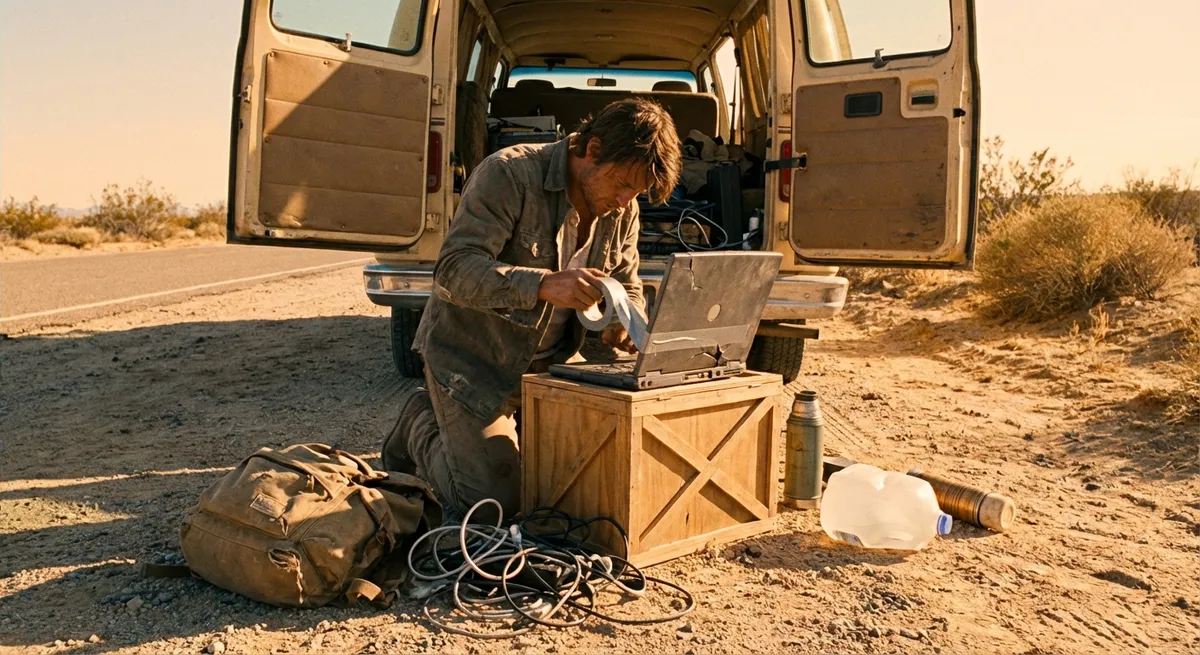
Being a digital nomad looks glamorous in photos: laptop, sunset, some kind of drink in a coconut. In real life, it’s flight delays, shaky Wi‑Fi, VAT receipts, and meetings at 11 p.m. in someone else’s time zone. The gap between the Instagram version and the working version is where most people burn out.
This isn’t about “chasing your dreams.” It’s about making sure the life you’ve worked for doesn’t quietly collapse under bad habits, bad planning, and wishful thinking. Below are five essential, field-tested habits that keep nomads working, earning, and sane long after the honeymoon phase wears off.
1. Treat Internet Like Rent, Not a Nice-to-Have
If your income depends on your laptop, your highest priority isn’t the view, it’s the connection. Most rookie mistakes come from underestimating how fragile Wi‑Fi is outside major hubs.
Don’t rely on listing promises like “High-speed internet” or “Great for remote work.” Ask direct questions before you book: “What is the upload/download speed in Mbps?” and “Is the router in the unit or shared with the building?” Request a speed test screenshot with a timestamp. Hosts who work with nomads won’t be surprised.
Have redundancy wherever you land: a local SIM with a generous data plan, hotspot capability, and at least one backup location you’ve already tested (coworking space, café, or a quiet hotel lobby). Learn how to run a speed test (via services like Speedtest by Ookla) and test your connection during the hours you’ll actually be working, not at 2 p.m. when no one else is streaming.
The goal: you never have to start a client call by apologizing for your connection. Once that happens regularly, your “freedom” starts to look like unreliability.
2. Plan Your Days Around Energy, Not Just Time Zones
Time zones get all the attention, but what actually keeps you productive is energy management. The same 8 a.m. start you had at home may not work after three overnight buses and a six-hour time shift.
Start by mapping three things for each new place:
- Your clients’ working hours
- Your own highest-focus window (usually a 3–4 hour block)
- Local realities (noise, heat, power cuts, lunchtime, prayer calls, etc.)
Instead of forcing yourself into a fixed “9 to 5,” design a pattern that fits both your body and commitments. For example: deep work 7–11 a.m., errands and movement 11–2, light admin 3–5, social time or exploring after. If you need to overlap with a home office, keep at least a two-hour “meeting window” where you’re always online and book calls only within that slot.
Protect that high-focus window ruthlessly. No sightseeing, no transit, no “quick coffee” then. Those hours are what pay for the rest of your day. Move everything else around them: workouts, meals, language classes. When energy, not tradition, drives your schedule, you stop feeling “behind” all the time.
3. Lower Your Friction: Build a Portable Work Setup
Nomads don’t fail because they lack motivation; they fail because every workday has too much friction. New plug, new chair, new noise, new desk height. Your brain gets exhausted just from adapting.
Your job is to standardize as much of your environment as you can carry. Think in terms of a “mobile office kit”:
- Laptop stand that folds flat (so your neck survives more than six months)
- Lightweight external keyboard and mouse
- Universal adapter with surge protection
- Short USB-C and charging cables you replace before they fray
- Noise-canceling or at least isolating headphones
- A small, hard-to-lose pouch where all of this lives
Set up your workspace the same way every time you land. Same layout, same angles, same routine: unpack, run a speed test, identify good call spots, note the loud hours. The first evening in a new place, do a “systems check” instead of doom-scrolling: does your chair need a cushion? Is the desk too low and needs a stack of books? Where’s the quietest corner for calls?
The less energy you waste “settling in,” the more you have left for actual work—and for enjoying where you are.
4. Build Local Stability Fast: Sleep, Safety, and a Few People
Constant motion destroys your baseline if you don’t rebuild it quickly each time. Real stability for nomads doesn’t come from a permanent address; it comes from a few simple anchors you recreate in every city.
First, sleep. Before you worry about coworking spaces, figure out:
- How dark you can make the room (eye mask if needed)
- How quiet it is at night (earplugs aren’t optional in many cities)
- How you’ll handle jet lag for the first 3–5 days
Tiny adjustments—like keeping roughly the same sleep and wake time across time zones, or using light exposure and short naps strategically—make a bigger difference than any productivity hack.
Second, safety. Look at your neighborhood like a local, not a tourist: where’s the nearest clinic or hospital, the pharmacy, late-night food, a 24/7 convenience store? Who can you call if your phone disappears or you get sick? Snap photos of your passport, visas, and key documents and keep them in encrypted cloud storage and offline on your device.
Third, people. You don’t need a hundred friends, but you do need some social contact that isn’t through a screen. Use coworking day passes, casual meetups, or language exchanges not just for networking, but to feel less like a ghost in each city. Work feels lighter when your brain doesn’t think you’re alone all the time.
5. Design for Longevity, Not Just the Next Destination
Anyone can nomad for three months on adrenaline. The hard part is still liking your life—and your work—after two or three years. That means thinking like a long-distance runner, not a sprinter.
Financially, don’t confuse lower cost of living with invincibility. Track your spending for at least a few months across different countries so you actually understand your burn rate. Factor in flights, visas, health insurance, coworking, and “surprise” costs like last-minute accommodation when a booking falls through. Aim to keep a real emergency fund (ideally several months of expenses) separate from your travel budget.
Professionally, your skills need to move faster than your passport stamps. Dedicate a fixed amount of time each week to leveling up: courses, tutorials, portfolio updates, certifications. That “extra” learning time is usually what separates nomads who can raise their rates from those who get stuck taking whatever comes.
Personally, define some non-negotiables that keep you grounded: exercise three times a week, one tech-free evening, weekly check-in with family or friends back home, therapy if you can access it remotely. The exact list doesn’t matter as much as actually sticking to it, especially when you’re tired or lonely.
The test of a solid nomad setup isn’t how epic your photos are; it’s whether you’d still choose this life if you turned Instagram off for a year.
Conclusion
Being a digital nomad isn’t about escaping structure; it’s about building the kind of structure that actually works for you when nothing around you stays the same. Reliable internet, energy-based planning, a portable setup, quick local stability, and a long-game mindset won’t make your trips look more dramatic—but they will keep your work, health, and sanity intact.
If you build these habits early, travel stops being a constant fire drill and starts feeling like what it should be: a different backdrop for a life and career you’re actually in control of.
Sources
- FCC: Broadband Speed Guide - Baseline guidance on internet speeds needed for different online activities, useful for evaluating accommodation Wi‑Fi claims.
- Speedtest by Ookla - Widely used tool to test real-world upload and download speeds wherever you’re working.
- CDC: Jet Lag – Tips for Travelers - Practical, research-based advice for managing jet lag and adjusting sleep across time zones.
- U.S. Department of State: Country Information - Official safety, health, and local conditions summaries for countries worldwide.
- Investopedia: Emergency Fund Definition and Planning - Clear breakdown of why and how to build an emergency fund, especially relevant for income-unstable lifestyles like long-term travel.
Key Takeaway
The most important thing to remember from this article is that this information can change how you think about Nomad Life.