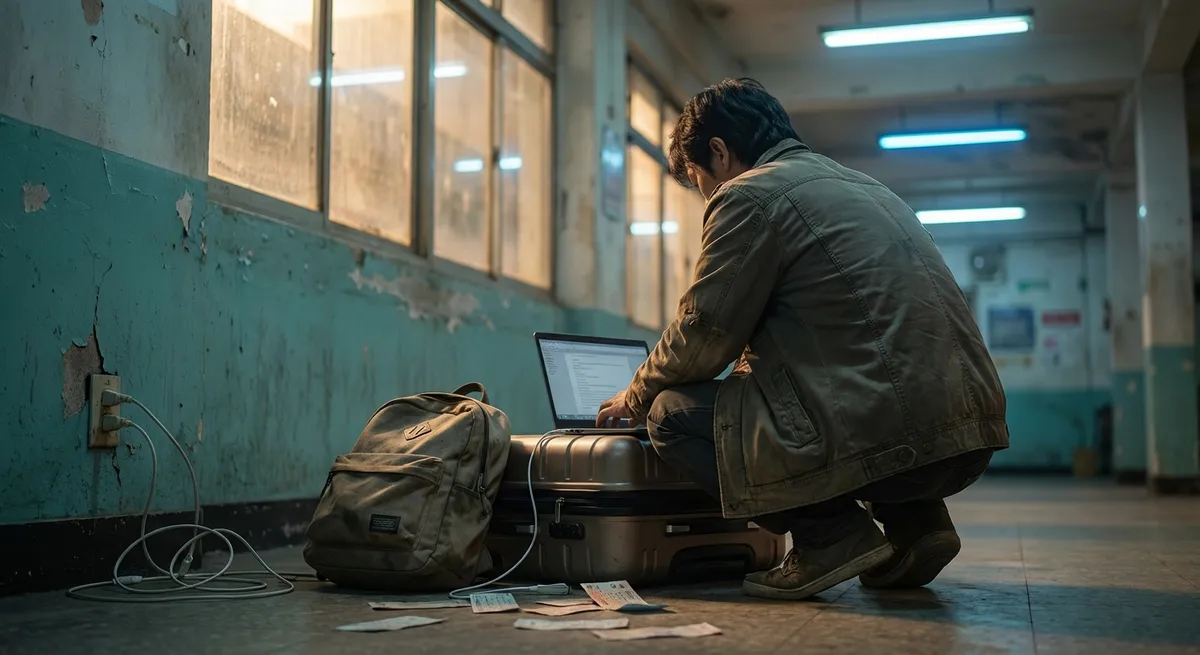
A lot of “travel tips” for digital nomads sound good on Instagram but fall apart the moment Wi‑Fi drops or your hostel roommate snores like a freight train. This is the stuff you learn after missed flights, lost debit cards, and client calls taken from stairwells. These five tactics aren’t glamorous, but they’re what keep your work reliable and your travels sustainable.
Treat Internet Like a Utility, Not a Perk
As a working nomad, internet isn’t “nice to have” — it’s your electricity. You wouldn’t sign a long-term lease without power; don’t book long stays without verifying the connection. Never trust “High-speed Wi-Fi” in a listing description on its own. Ask hosts for a screenshot of a speed test taken at the exact place you’ll work (desk, room, or common area), and double-check that the test includes both download and upload speeds; remote calls depend heavily on upload, which many places neglect. If possible, ask about the router location — being three walls away can cut your speed in half.
Always have a backup connection strategy. At minimum, that means: a local SIM with a decent data package, a phone that supports tethering, and a rough map in your head of nearby cafés or coworking spaces with reliable Wi-Fi. Before big calls, test your backup hotspot with a video meeting, not just a speed test — stability matters as much as pure speed. In countries where connectivity is inconsistent, consider scheduling your heaviest online work for morning hours when networks are usually less congested. Internet isn’t what you react to; it’s what you plan around.
Design a “Portable Office” You Can Set Up in 3 Minutes
Your workspace shouldn’t rely on luck. Build a portable office kit you can unpack and pack blindfolded. Start with the basics: a lightweight laptop stand to fix your posture at café tables, a compact external keyboard and mouse, and a travel power strip or cube with multiple outlets. This solves three chronic nomad problems at once: terrible ergonomics, not enough outlets, and fighting over plugs with everyone else charging devices. Add a short extension cord; “one outlet across the room” becomes “workable desk setup.”
Cable organization is underrated but critical. Use a small pouch specifically for work gear: chargers, USB-C adapters, spare earbuds, and a backup pair of wired headphones (Bluetooth fails more often than you think, and wired doesn’t care about battery levels). Keep that pouch in your carry-on, never in checked luggage, so you can work during airport delays or if your bag goes missing. Over time, refine this kit ruthlessly: anything you haven’t used in a month either gets mailed home or replaced with a lighter, more compact version. The goal is simple: anywhere with a chair and a flat surface becomes your office in under three minutes.
Run Your Money Like You Expect Things to Go Wrong
Travel exposes every weakness in your financial setup. Cards get blocked, ATMs run out of cash, and banks flag your “suspicious” transactions at the worst possible moment. Start by carrying at least two debit cards from different banks and one credit card stored separately from your wallet (think day bag vs. main bag). If one card gets swallowed by an ATM or flagged by fraud detection, you still function. When you arrive in a new country, withdraw enough local currency to survive a few days of basic expenses in case card networks fail.
Notify your banks of ongoing travel or set your profile to allow international transactions where possible; many now let you manage this through their app. Use accounts that refund ATM fees or minimize foreign transaction fees — a few percent on every payment adds up fast when you’re on the road for months. Keep screenshots of important financial info (last four digits of cards, bank support phone numbers, and your bank’s international call instructions) stored securely offline. Also, mentally separate “travel survival money” from “business expenses”: if a client pays late or a platform delays your payout, you still need a cushion to move, eat, and get to your next destination. Nomad life works when cash-flow problems are just logistics, not emergencies.
Build a Sleep Strategy Before Your Body Breaks Down
Consistent work doesn’t survive on bad sleep, and constant travel is a direct hit on your rest. Don’t wait until you’re desperate to figure out how you sleep best on the road. Assemble a non-negotiable sleep kit: quality earplugs, a comfortable eye mask, and either a white-noise app or a small, pre-downloaded playlist of ambient sounds for airplane mode. Those three items neutralize most hostel, guesthouse, and city-noise problems. If you’re sensitive to bedding, pack a lightweight sleep sack or specific pillowcase — it adds comfort and familiarity when everything else is new.
For time zones, aim for “manageable,” not “perfect.” When you change zones by more than a few hours, give yourself at least one buffer day before important calls if you can. Anchor yourself with two consistent points: a fixed wake-up time and a fixed “screens-off” window each night. Your body handles shifting locations better when it recognizes a predictable end to your day. Limit caffeine in the six hours before you want to sleep — it’s easy to lean on coffee as you travel, then wonder why you’re staring at the ceiling at 2 a.m. The nomads who last aren’t the ones with the best gear; they’re the ones who protect their sleep like a business asset.
Plan Travel Days Like You Won’t Be Able to Work (Because You Probably Won’t)
On paper, travel days look like “just a flight and a train, I can work in between.” In reality, they turn into delayed buses, loud terminals, and dead outlets. If your income depends on consistency, treat travel days as low-output or off-grid days by default. Avoid scheduling client calls, deadlines, or live sessions on days you’re crossing borders or making multiple connections. When you can’t avoid it, build in generous buffers: assume every transit leg will take longer than promised and that you’ll need time to find Wi‑Fi, charge gear, and orient yourself.
Front-load your work before you move. The day before travel, clear as many small tasks and messages as possible and pre-write anything that doesn’t require real-time input. Download what you need: offline maps, key documents, boarding passes, and reference files. If you do end up with unexpected quiet time and good Wi‑Fi, treat any work you get done as a bonus rather than something you’re relying on. This mindset removes a lot of stress: instead of wrestling with bad airport internet trying to upload a file before boarding, you’ve already handled it from a stable connection. Your future self, standing in a chaotic bus station with 3% battery, will be grateful.
Conclusion
Digital nomad life isn’t held together by perfect gear or picturesque cafés; it’s held together by boring, reliable systems that quietly do their job. When your internet is planned, your office is portable, your money is resilient, your sleep is protected, and your travel days aren’t overloaded, you stop firefighting and start actually enjoying the freedom you built. None of these tactics look impressive on social media — but they’re exactly what keep you on the road long after the novelty wears off.
Sources
- Federal Communications Commission – Measuring Broadband America - Background on internet speed, latency, and why upload vs. download speeds matter
- U.S. Department of State – International Travel - Official guidance on travel preparation, documents, and safety considerations
- Consumer Financial Protection Bureau – Credit Cards and Debit Cards Abroad - Practical advice on using cards internationally and avoiding common banking issues
- Centers for Disease Control and Prevention – Jet Lag and Sleep - Evidence-based tips for managing jet lag and sleep during travel
- Harvard Medical School – Why Sleep Matters - Overview of how sleep impacts performance, decision-making, and long-term health
Key Takeaway
The most important thing to remember from this article is that this information can change how you think about Travel Tips.