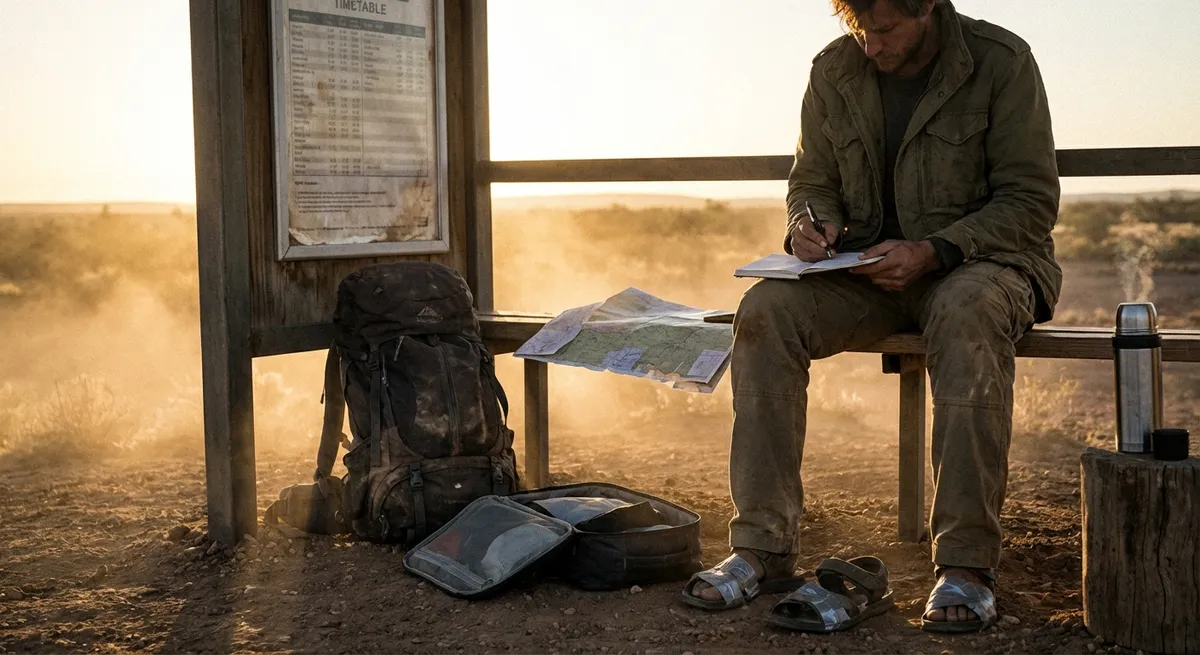
If you travel full-time, you already know: the internet is full of “ultimate hacks” that fall apart the first time a flight is canceled or a visa official has a bad day. What keeps you moving isn’t hacks—it’s habits. The small, boring, unsexy things you repeat every single trip that quietly save your budget, your deadlines, and your sanity.
These are field-tested habits I’ve seen seasoned nomads use in airports at 3 a.m., at border crossings with no Wi‑Fi, and in cities where Google Maps is more suggestion than reality. Use these as a checklist to tighten up your own system, not as rigid rules.
Treat Every Move Day Like a Client Project
Experienced nomads don’t “wing it” on travel days—they manage them like high-stakes work. That means you create a simple move-day plan: departure time, arrival time, backup route, key addresses, and “non‑negotiables” like when you’ll eat and when you’ll be online again. Write it down somewhere you can see offline (Notes app, Notion export, or even a photo of a handwritten page). Block your calendar so no one can book meetings within 12–24 hours of arrival unless it’s critical. Before the trip, decide what “success” looks like for that day: maybe it’s as basic as “Arrive, check in, send one ‘I’ve landed’ message, sleep.” When you treat travel days as project days, you stop overcommitting, you miss fewer details, and you arrive with energy left to actually work.
Build a “Second Wallet” for When Things Go Wrong
At some point, your main wallet will disappear—stolen, forgotten, or riding solo in the back of a taxi you’ll never see again. Serious nomads assume this and set up a second wallet system. Keep one low-limit card and a different bank card in a separate place: hidden pocket in your backpack, packing cube, or money belt you actually wear while moving. Store a little emergency cash in the same spot in a major currency that travels well (usually USD or EUR), plus the equivalent of one or two nights’ accommodation in the local currency once you arrive. Photograph your cards (front and back) and store the images securely encrypted (e.g., password manager, secure notes), along with your bank’s emergency phone numbers. This isn’t about paranoia; it’s about turning a “trip-ending disaster” into an inconvenient story you’ll tell over beers later.
Design Your “Minimum Viable Workspace” Before You Land
Instead of hoping you’ll figure out work on arrival, define your minimum viable workspace (MVW) ahead of time. That means knowing the bare essentials you need to deliver: stable enough internet for calls or uploads, a flat surface, a chair that won’t destroy your back in two hours, power outlets, and backup power if possible. Before booking, look for real photos of desks and chairs, not just the bed and the balcony. Message the host with specific questions: “What internet speed do you get on a speedtest.net test near the router?” “Is the table in the photos the one I’d work on?” Save backup work spots—two nearby cafés, a coworking space, or a library—as pinned locations on your map app before you arrive. The goal isn’t perfection; it’s knowing where you’ll go when the Airbnb Wi‑Fi turns out to be a 1998 time capsule.
Travel With a Personal “Local Intel Script”
The best intel doesn’t come from blogs; it comes from people on the ground. Build a simple script of questions you ask locals every time you arrive somewhere new. Ask the hostel staff, barista, coworking receptionist, or your Airbnb host: “Where do you actually go to work or study?” “If you had to buy a SIM or fix your phone today, where would you go?” “If I need help at 2 a.m., where’s the safest place to head?” and “What’s one area tourists go that locals avoid?” Note the answers in a running digital notebook sorted by city. Over time this becomes more valuable than any guidebook: trusted hospitals, late-night pharmacies, safe ATMs, reliable print shops, and realistic commute times. This one habit shrinks your adaptation time in a new city from weeks to days.
Adopt a Default “48-Hour Rule” in Every New Country
The first 48 hours in a new country are when you’re most likely to make dumb mistakes—getting scammed, overpaying, trusting the wrong person, or burning yourself out. Give yourself a defined “adjustment window” and keep it simple on purpose. Stick to verified taxis or ride apps, eat at obvious busy spots, and avoid committing to major decisions (long-term rentals, big purchases, sketchy tours) until you’ve felt the place at different times of day. Use those two days to walk your immediate area in real life: find your closest grocery store, ATM attached to a real bank, pharmacy, laundromat, and a quiet place to work. Notice how the neighborhood changes after dark. This rule doesn’t make you paranoid—it gives your brain time to calibrate, so you can move from tourist surface-level to functional local mode without unnecessary drama.
Conclusion
Nomad life doesn’t fall apart because you picked the wrong packing cubes; it falls apart when you rely on luck instead of systems. Treat travel days like work, assume you’ll lose your wallet, define your minimum workspace, mine locals for intel, and protect your first 48 hours in any new place. None of this looks flashy on social media, but it’s exactly what keeps long-term travelers on the road after the “adventure” phase wears off and real life kicks in.
Key Takeaway
The most important thing to remember from this article is that this information can change how you think about Travel Tips.