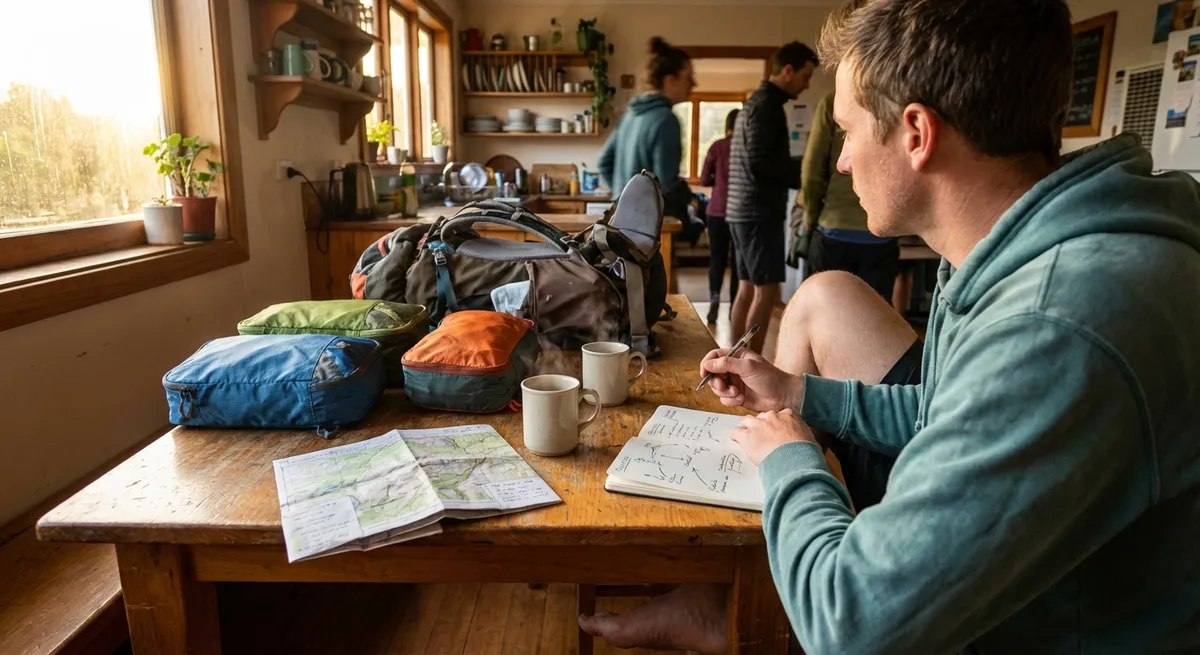
The most useful travel tricks don’t come from Instagram—they come from missed flights, broken laptops, and sweating through a client call because the power cut out mid-sentence. This isn’t about “travel hacks.” It’s about five habits that keep your work intact, your stress low, and your options open when the road does what it always does: surprises you.
Build a Backup for Every Critical Thing
The longer you’re on the road, the more one rule matters: anything that can fail, will fail, and usually at the worst time.
For documents, keep three layers: physical, local digital, and cloud. Your passport, visa pages, and key IDs should be scanned and saved in an encrypted cloud folder (Google Drive, Dropbox, or similar), with offline copies on your laptop and phone. If your passport is lost or stolen, having clean digital copies ready makes embassy visits faster and less painful.
For money, assume a card will get blocked or eaten by an ATM. Travel with at least two debit cards from different banks and one credit card stored separately from your main wallet. Keep some local cash plus a small stash of a major currency (USD or EUR) hidden in your bag—not for daily use, but for real emergencies.
For connectivity, don’t rely on a single option. Download offline maps (Google Maps, Maps.me), keep key addresses and directions in a note that works offline, and carry a basic text-only backup of important contacts and bookings. On the road, redundancy isn’t paranoia; it’s insurance.
Treat Internet and Power Like Your Real Office Lease
Most digital nomads obsess over cheap flights and cool apartments, then discover on day one that the Wi-Fi dies every afternoon and there are no outlets near the desk. Work first, views second.
Before you book accommodation, ask for a screenshot of a speed test taken inside the apartment at typical working hours, not just “Wi-Fi is good.” Ask direct questions: is the router inside the unit or shared with the building, how often do power cuts happen, and is there a backup (generator, battery system, or at least a power strip with surge protection)?
Always travel with a small power strip and at least one decent surge protector—especially in places with unstable electricity. A short power blip can corrupt files or damage your charger. A compact battery pack plus the ability to tether from your phone can save client calls when the building’s internet drops.
Finally, test everything in the first 24 hours. Run a speed test, join a video call, and upload something big. If it’s not workable, change your plan early, not after you’ve promised clients you’re “fully set up.”
Make Health and Sleep Non‑Negotiable Infrastructure
Nomads burn out faster when they treat their body as an afterthought to flight deals. Your sleep, posture, and daily movement will quietly decide how long you can sustain this lifestyle.
Start by controlling what you can in any room: carry a compact eye mask and earplugs, and don’t hesitate to move the bed slightly away from noisy windows or thin walls. If you’re sensitive, a white-noise app or small travel sound machine can be the difference between six hours of sleep and two.
For your body, assume chairs will be terrible and tables will be the wrong height. A lightweight laptop stand, external keyboard, and mouse can turn almost any flat surface into a workable setup and protect your neck and wrists over months, not just a week. If you can’t pack all of that, at least prioritize the stand and mouse or trackpad alternative.
Health care is easy to ignore—until you’re sick in a country where you don’t speak the language. Before you arrive somewhere new, check what kind of medical facilities are available, whether your travel or international health insurance actually works there, and where the nearest urgent care or hospital is. Save those details offline. Spending an hour preparing before you need it is far better than trying to figure it out at 3 a.m. with a fever.
Use Local Logistics Like a Local, Not a Tourist
Work gets easier when you move through a place the way residents do, not the way tourists are sold to. That starts with transport and daily logistics.
Public transport apps, local ride-share services, and city-specific cards (metro passes, transport apps) can save you a lot of money and uncertainty. Learn the local rush hours and avoid scheduling key calls during peak traffic if you know you’ll be moving between places. When you arrive in a new city, do one dry run: find the nearest reliable supermarket, pharmacy, café with power outlets, and a backup workspace (coworking or library).
Also, learn how deliveries work locally. In some countries, grocery and food delivery are cheap and fast; in others, they’re unreliable or cash-only. Knowing whether you can get a power adapter, SIM card, or basic office gear delivered to you in a day can completely change how you handle small crises.
Finally, take 30 minutes in every new city to walk your immediate neighborhood without headphones. You’ll spot practical details—street lighting at night, how busy a place gets, where people actually eat and shop—that no booking site or review will tell you.
Move Slower Than Your FOMO Wants You To
Most problems for new digital nomads come from trying to live like a full-time traveler and a full-time remote worker. That blend only works if you slow the travel part down.
Instead of changing cities every few days, think in weeks or months. Every move costs you: travel time, lost work hours, re-orienting to a new place, and simple mental fatigue. Fewer moves mean more stable routines, better local relationships, and lower chances of missing deadlines because your bus was late or your flight moved.
When you plan your calendar, start with your fixed work commitments—big deadlines, recurring calls, launch weeks—and place travel days around those, not inside them. Treat travel days as non-working days or very light admin days. It’s tempting to squeeze in work at airports and on trains, but counting on that time for anything important is how mistakes happen.
Slower travel also helps you see if a place is truly workable for you. A city that feels exciting for four days might feel exhausting in four weeks. Give yourself the chance to find out before you burn through your energy chasing the next new place.
Conclusion
Being a digital nomad isn’t about finding the perfect café or the cheapest flight—it’s about building systems that keep working when your surroundings change. Backups, reliable power and internet, basic health structure, smart local logistics, and slower movement are the unglamorous foundations that make the lifestyle sustainable.
You don’t need to implement everything at once. Start with one weak spot—maybe your backup setup, or how you choose accommodation—and tighten that up on your next trip. The goal isn’t a frictionless life; it’s a resilient one that keeps you earning, exploring, and moving on your own terms.
Sources
- [U.S. Department of State – Lost or Stolen Passports](https://travel.state.gov/content/travel/en/passports/have-passport/lost-stolen.html) - Official guidance on what to do and what documents help if your passport goes missing
- [UK National Cyber Security Centre – Backing up your data](https://www.ncsc.gov.uk/collection/top-tips-for-staying-secure-online/backing-up-your-data) - Practical advice on secure backups and why redundancy matters
- [Centers for Disease Control and Prevention – Travelers’ Health](https://wwwnc.cdc.gov/travel) - Country-specific health information, vaccines, and medical preparation tips for travelers
- [World Health Organization – Travel Advice](https://www.who.int/travel-advice) - General health, safety, and preparedness information for international travel
- [International Telecommunication Union – Measuring digital development](https://www.itu.int/itu-d/reports/statistics/) - Data and reports on global connectivity and internet infrastructure quality
Key Takeaway
The most important thing to remember from this article is that this information can change how you think about Travel Tips.