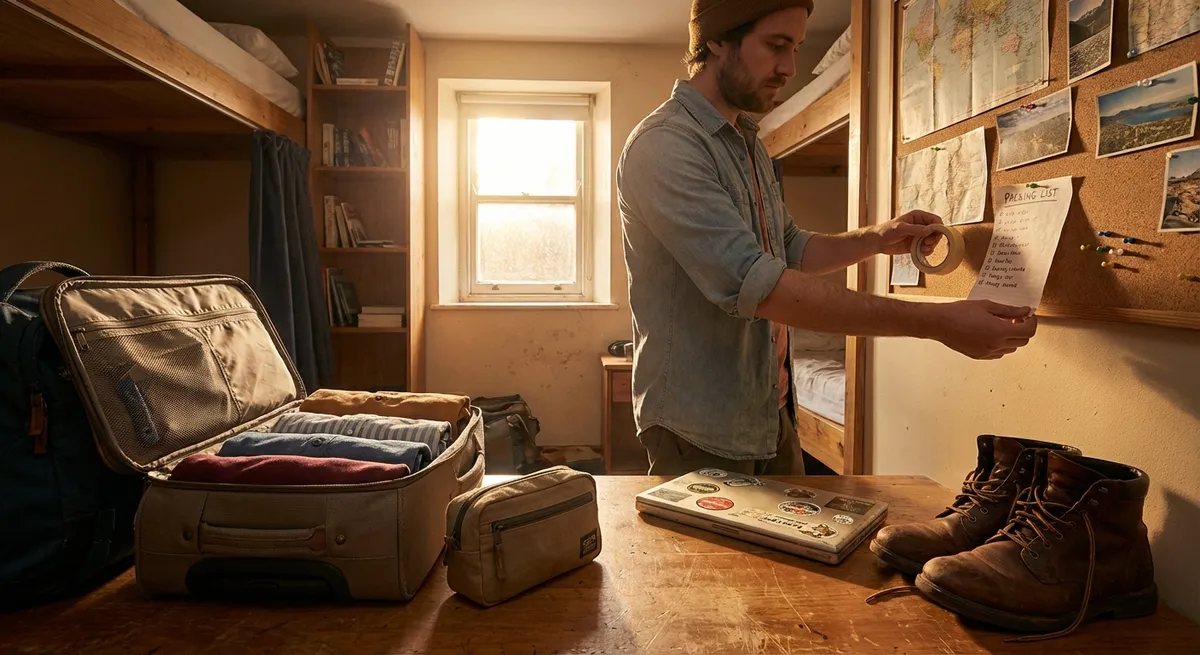
You can tell who’s new to the digital nomad game by their luggage. The beginners haul their “just in case” life in two giant suitcases. The veterans? One backpack, one small carry-on, and a system. This isn’t about minimalist aesthetics—it’s about moving fast, working reliably, and not burning out every time you cross a border. These five habits aren’t hacks; they’re the unglamorous basics that keep you productive on the road.
Build a “Border-Ready” Document System
The most stressful nomad moments usually happen at immigration desks, not coworking spaces. Having your paperwork dialed in turns those 30-second questions into non-events.
Set up three layers for your travel documents. First, physical: keep your passport, backup cards, and cash in a slim, zipped pouch that always lives in the same spot in your bag. Don’t shuffle it around; muscle memory is your insurance policy when you’re sleep-deprived at 4 a.m. Second, digital: store scans of your passport, visas, vaccine records, and key bookings in a secure cloud folder (Google Drive, Dropbox, or iCloud) plus an encrypted password manager with secure notes. Third, quick access: create a simple one-page “border file” in PDF with your outbound flight, first accommodation, and any relevant visa confirmations—easy to pull up offline on your phone or laptop.
For countries with stricter entry rules, read the official government site—not random travel blogs—before you fly, and screenshot key pages in case airline staff are confused about requirements. If you’re long-term nomading, keep a running doc of your entries and exits, including dates and stamp photos; some immigration officers will ask for travel history, and having it ready can change the tone of the conversation immediately. The goal is simple: never be the person digging through email at the counter while the line sighs behind you.
Design Your “Mobile Office” Before You Book Anything
Most people choose destinations based on beaches and cost of living, then try to bolt a work setup onto whatever they find. That’s backwards. Your income is your real visa, and it depends on your ability to work reliably.
Start by defining your absolute non-negotiables for work: minimum upload/download speed, typical working hours in your home time zone, noise tolerance, and backup power/internet options. Before you book a stay, don’t just trust “Wi-Fi included” in the listing. Ask the host for a speed test screenshot (up and down), confirm if the router is inside the unit or shared across floors, and check reviews for mentions of power cuts and noise. In countries with frequent outages, look for accommodations or coworking spaces that advertise generators, battery backups, or Starlink.
Build a compact, repeatable office kit that lives in your carry-on: a lightweight laptop stand, wired earbuds (for when Bluetooth dies mid-call), a multi-port charger, a small extension cable, and a USB-C hub. Add a paper notebook and pen—when Wi-Fi drops and power is sketchy, analog planning keeps you sane and productive. Then, when you land somewhere new, recreate the same basic layout: laptop height, chair position, lighting, and call background. Familiar ergonomics reduce fatigue more than you’d think when everything else in your life keeps changing.
Treat Health Like a Monthly Project, Not a Crisis Response
Many nomads quietly run on caffeine, irregular meals, and the hope that nothing serious happens abroad. That’s fine—until it isn’t. Once you leave your home system, “getting help” becomes more complex: language barriers, uncertain clinics, confusing insurance policies.
Start by getting clear on your coverage. Read your travel or international health insurance policy line by line: what’s covered, what’s excluded, and how claims work. Save the 24/7 emergency contact numbers in your phone and write them in your passport pouch. If you take prescription meds, travel with extra (within legal limits), plus a copy of your prescriptions and the generic drug names, not just brand names—brands vary by country, active ingredients don’t.
On the ground, treat each new city as a small research task. Within the first week, identify one reputable clinic or hospital, one pharmacy that seems competent and well-stocked, and the local emergency number (it’s not 911 in most places). Check how tap water is rated locally and adjust accordingly; buying a small water filter bottle often pays off quickly. Sleep is your real performance enhancer—blackout eye mask and basic earplugs cover 80% of terrible Airbnb choices. You don’t need a perfect fitness routine, but you do need a minimum baseline: daily walking, occasional strength work with bands or bodyweight, and some mobility so your back survives bad cafe chairs.
Use Money Systems That Don’t Collapse When One Card Fails
On the road, your “payment system” is more fragile than you think. One frozen card, one lost wallet, or one country that hates your bank’s network, and suddenly you’re negotiating hostel beds with strangers and spotty ATMs.
Build redundancy on purpose. Travel with at least two debit cards from different banks/networks and one credit card, stored in separate places (e.g., main wallet, hidden pouch, and a third in your luggage). Before you travel, notify your banks, enable travel alerts where possible, and set up app-based verification instead of SMS whenever you can—roaming SMS is unreliable and expensive. Download your banking apps and test login methods while you still have your home number active.
At each new destination, learn the local payment culture. Some places are tap-and-go heaven; others are cash-first with ATMs that run empty on weekends. Pull an initial batch of local currency from a reputable ATM (ideally a major bank branch), then watch how locals pay at stores and cafes. Avoid dynamic currency conversion (DCC) on card terminals and ATMs—always choose to be charged in the local currency, not your home currency. Keep a small emergency stash of “universal” money (USD or EUR) somewhere separate from your wallet; it’s less about daily use and more about worst-case bridge funding if cards stop working.
Plan Your Moves Around Energy, Not Just Cheap Flights
New nomads often chase the cheapest ticket and the most exotic destination, then wonder why they’re exhausted, behind on work, and weirdly resentful of travel. The hidden cost is always energy—time zones, bad sleep, constant adaptation.
Start treating travel days as work write-offs, not half-productive “maybe I’ll get some emails done at the airport” fantasies. On days you move cities or countries, assume zero meaningful work will happen. If it does, bonus. Cluster your moves instead of pinballing across continents: staying within similar time zones for a few months at a time is kinder to your body and your work hours. When you must jump time zones, plan 2–3 “light work” days for adjustment if you handle client calls or collaborative work.
Build predictable “first 48 hours” routines. On arrival, do the same things: get local SIM or eSIM working, confirm Wi-Fi, find a supermarket, locate nearest cafe/coworking, map pharmacy and hospital. Walk your immediate area in daylight to get your bearings; it reduces the background stress of not knowing where anything is. Don’t overschedule early sightseeing. Your job in week one is to stabilize—sleep, food, connectivity—and then layer in exploration. Sustainable nomadism is basically this: protecting your baseline so you can actually enjoy the freedom you worked so hard to create.
Conclusion
Reliable nomad life isn’t built on hacks; it’s built on boring, repeatable systems that keep working no matter what city name is on your Uber receipt. Documents ready before borders. Workspace defined before destinations. Health thought about before emergencies. Money backed up before cards fail. Moves planned around your energy, not your FOMO.
Once those pieces are in place, the rest of travel gets lighter. You stop firefighting and start noticing—the small streets, the morning light, the quiet hours between your calls and the city’s rush. That’s the version of nomad life that actually lasts.
Sources
- U.S. Department of State – Traveler’s Checklist - Official guidance on documents, safety, and preparation before traveling abroad
- CDC – Travelers’ Health - Up-to-date health advisories, vaccine recommendations, and country-specific health information for international travelers
- World Health Organization – International Travel and Health - Reference on health risks, preventive measures, and medical considerations for travelers
- Federal Trade Commission – Credit, ATM, and Debit Cards While You Travel - Practical advice on protecting payment cards and what to do if they are lost or stolen
- Centers for Disease Control and Prevention – Jet Lag and Sleep - Information on managing sleep disruption and adjusting to time zone changes
Key Takeaway
The most important thing to remember from this article is that this information can change how you think about Travel Tips.