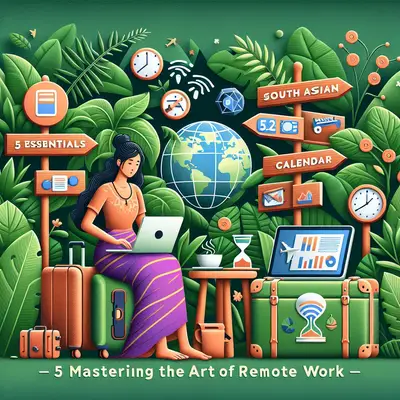
Most digital nomads obsess over where the Wi‑Fi is and forget what really keeps them afloat: security, stability, and systems that still work when flights are delayed, cards get blocked, and a “quick visa run” turns into an extra month abroad. Remote work isn’t just about finding a cute café; it’s about protecting your income, your data, and your mind in places where nothing is guaranteed.
This guide walks through five field-tested essentials for working remotely as a nomad: not theory, but what actually keeps your work (and life) from blowing up at the worst time.
Build a “Redundant Internet” Plan, Not Just Find Wi‑Fi
The average remote worker needs internet; a working nomad needs backup internet. When your only Zoom call of the week drops because everyone in the hostel jumped on Netflix, it’s not just annoying—it's lost trust with your client or employer.
Start with three tiers of connectivity wherever you land. First, a primary connection: this might be your apartment’s fiber line or a coworking space you’ve vetted. Actually test it: run a speed test at the same time you normally work, and ask staff what happens when the power cuts. Second, a mobile data plan with hotspot capability; buy a local SIM or eSIM with at least one heavy-workday’s worth of data (video calls + uploads) already loaded, not “I’ll top up later.” Third, a “panic option”: a nearby café, coworking space, or hotel lobby you know is laptop-friendly and open during your time zone’s working hours.
Keep all access details documented: Wi‑Fi passwords, coworking addresses, and your SIM’s data-check code in one offline note. Before important calls, pre-download files, sync critical documents, and turn off automatic updates. If your connection is shaky, switch to audio-only, close bandwidth-hungry apps, and have a written summary ready in case you drop and need to follow up by email. In some cities, planned outages are normal; check local expat or nomad groups and schedule calls around those patterns instead of pretending they won’t affect you.
Treat Time Zones Like a System, Not a Math Problem
Nomads who “just keep track in their head” are the ones who show up an hour late when daylight savings time hits in their client’s country. The more continents you span, the more you need to stop winging it and build a system that doesn’t rely on memory or quick math.
Start by locking in your anchor hours: a non-negotiable time window when you’re consistently available for calls and fast responses. Then, choose destinations where those hours are realistic. For example, if you work mainly with New York–based clients, Southeast Asia will mean late nights; Europe or North Africa will feel much more humane. Plan your travel with this in mind instead of booking a cheap flight and figuring it out later.
Use tools that enforce clarity by default. Set your Google Calendar’s default time zone to where your clients are, and let your laptop or phone reflect your local time. Never send a time like “Let’s meet at 4 pm my time”; instead, send it in their time zone and add a calendar invite immediately. Watch out for daylight savings changes—they may not exist in your current country but will still shift your overlap with your home base. In weeks where time zones jump, be extra conservative: confirm call times twice and avoid back-to-back meetings you can’t adjust.
Finally, stabilize your own body clock. Pick a sleep/wake window you can realistically maintain in your current country and stick to it even on non-workdays. Your brain doesn’t care that you’re in a new city; if your schedule keeps swinging three hours each way, your focus and mood will nosedive long before your Instagram feed looks good.
Build a Quiet, Repeatable Money System Before You Need It
Nomads don’t usually get taken out by a lack of work; they get taken out by a blocked card, a frozen PayPal account, or a random banking rule they didn’t read. If you’re relying on a single bank card and a single payment platform, you’re running your livelihood on a thread.
Start by diversifying your financial rails. Have at least two bank accounts in different institutions and two ways to get paid (for example, direct bank transfer plus a global platform such as Wise, Payoneer, or similar). Keep at least one backup debit or credit card stored separately from your everyday wallet—ideally in your luggage or hidden in your accommodation. Notify your banks of your travel plans and enable app-based verification so you can approve transactions even when SMS codes don’t arrive abroad.
Keep a simple but strict cash strategy. In many countries, you’ll need some cash for transport, coworkings, or cafés that don’t take foreign cards, but large wads of cash paint a target on your back. Withdraw modest amounts aligned with your weekly budget and store them in different places, not all in one wallet. Keep an emergency stash (a couple hundred in USD or EUR) in a hidden, water-resistant spot in your main bag; don’t touch it unless a card fails and ATMs are down or unsafe.
Finally, treat your runway like a non-negotiable business metric. Keep at least 3–6 months of living expenses in an account you don’t use daily. This buffer lets you walk away from bad clients, handle a medical issue, or fly out of a country if something turns unstable. Track your actual monthly cost of living—not the idealized “if I only cooked and never moved.” Your burn rate as a nomad includes visas, transit between cities, and gear replacements. Build your rates and contracts around realistic numbers, not the cheapest month you ever had.
Protect Your Work Like Your Passport (Because It Is)
If your laptop dies, gets stolen, or simply refuses to start in a country where Apple or your brand has no authorized repair center, your income is instantly at risk. Backups and security for nomads aren’t “nice-to-have”; they’re how you keep working when the worst happens far from home.
Start with layered backups. Use a cloud service like Google Drive, OneDrive, Dropbox, or a similar provider for all active work documents—configured to sync automatically when you have Wi‑Fi. Pair that with a small, solid-state external drive that you back up to at least weekly. Store the drive separately from your laptop when you’re in transit; if your backpack disappears, you don’t want your backup disappearing with it.
Strengthen your digital security before you travel. Turn on two-factor authentication (2FA) for your email, cloud storage, banking, and any work-related accounts. Use an authenticator app instead of SMS where possible, as SIM swap fraud and roaming issues are common. Invest a couple of hours in a password manager to avoid reusing the same credentials across services; if one gets compromised on a sketchy network, you won’t lose everything.
Be realistic about public Wi‑Fi. Assume anything you do on unsecured networks (airports, cafés, hostels) could be watched. Use a reputable VPN, avoid logging into sensitive accounts on open networks, and disable automatic connection to saved networks on your devices. On shared accommodations, log out of streaming services and work tools every time, and never leave your laptop unattended even for a “quick” trip to the bathroom. In some cities, opportunistic theft is measured in seconds, not minutes.
Design Work Rhythms That Can Survive Constant Movement
Nomad burnout usually isn’t about working too much; it’s about working chaotically—late nights after long bus rides, calls from noisy hostels, and “I’ll catch up on Monday” turning into weeks of half-focus and guilt. The solution is to build rhythms that still function even when the scenery keeps changing.
Start by scheduling your travel around your work, not the other way around. Don’t book long-haul flights or overnight buses on heavy meeting days. Block travel days on your calendar as “busy” and proactively warn clients or teammates that you’ll be slower to respond. After big moves (new country, new time zone), give yourself at least one low-intensity work day to get your bearings instead of pretending you can land, find a SIM, set up housing, and be sharp for important calls in the same 24 hours.
Create a portable “start work” and “shut down” ritual that takes under 15 minutes and doesn’t depend on any specific location. This might be making coffee, plugging in headphones, reviewing your top three tasks, and closing everything unrelated. At the end of the day, write a quick note to your future self: what you finished, what’s blocked, and what the next concrete action is. When you’re tired or in a new city, this list becomes your brain’s external hard drive.
Be intentional about deep work vs. shallow work. Plan focused, Wi‑Fi-stable blocks for tasks that need concentration and leave admin, email, and messaging for less predictable situations like airports or trains. If you’re constantly moving, you can still hand yourself 2–3 solid work blocks per week by protecting specific mornings or evenings from social plans and sightseeing. The goal isn’t to be antisocial; it’s to prevent your work from bleeding into every spare hour just because you didn’t defend any.
Conclusion
Remote work as a nomad isn’t sustained by “freedom” slogans; it’s held together by boring but critical systems you can trust when things go sideways. Solid backups, redundant internet, multiple ways to get paid, a reliable time zone strategy, and portable routines aren’t glamorous—but they keep your income steady and your stress under control while you’re changing countries.
If you build these five essentials before you need them, you stop scrambling and start choosing how and where you work. That’s when nomad life shifts from constantly surviving to actually feeling sustainable.
Sources
- U.S. Federal Trade Commission – Online Security Tips – Practical guidance on passwords, 2FA, and avoiding common online security risks
- National Cybersecurity Alliance – Remote Work Security Resources – Best practices for securing devices and data while working remotely
- FCC – Broadband Speed Guide – Explains recommended internet speeds for activities like video conferencing and large file transfers
- Wise – Guide to Getting Paid as a Freelancer or Remote Worker – Overview of international payment methods, fees, and practical considerations for remote professionals
- Harvard Business Review – How to Collaborate Effectively If Your Team Is Remote – Research-backed advice on remote collaboration, time zones, and communication norms
Key Takeaway
The most important thing to remember from this article is that this information can change how you think about Remote Work.