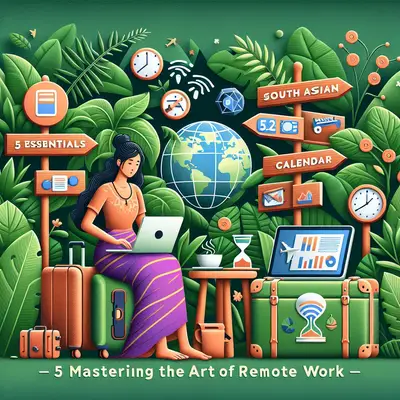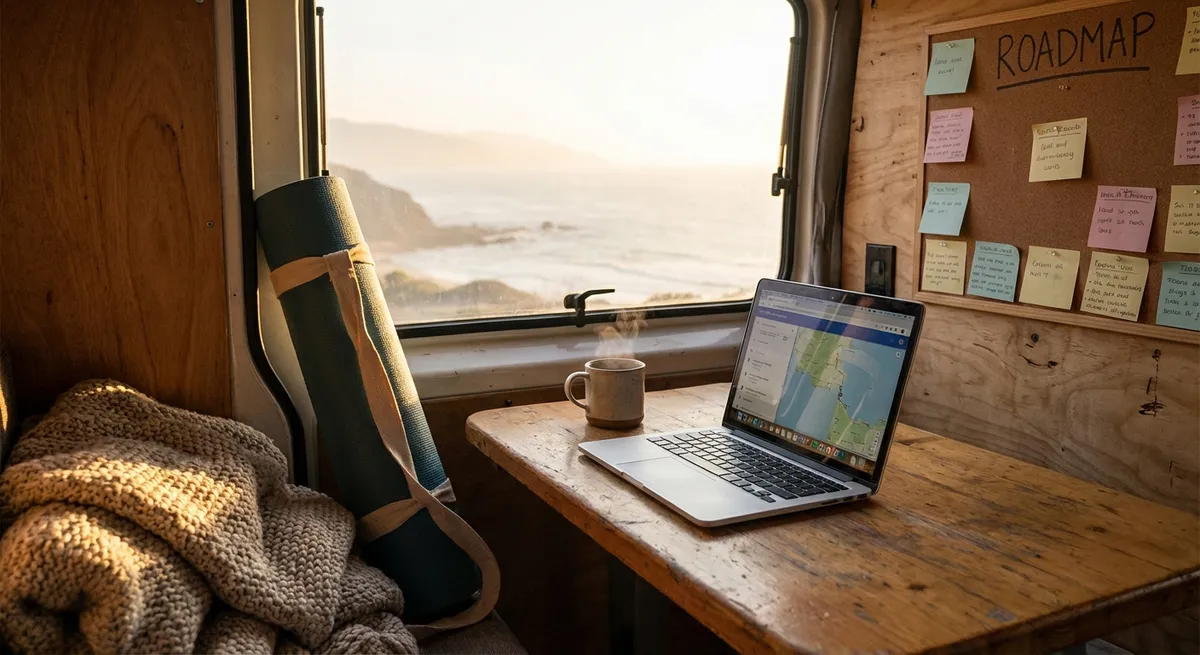
Remote work looks glamorous on Instagram, but anyone who’s taken calls from airport floors, fought with café Wi‑Fi, or pulled midnight shifts for a client in another time zone knows the other side of the story. The nomad life isn’t “laptop on the beach”; it’s learning how to stay sharp, reliable, and sane when your desk keeps moving.
This is a practical playbook built from the road: what actually keeps your work on track when your life is in motion. No fluffy theory—just field-tested habits you can steal and start using this week.
Build a Mobile Work Setup You Can Rebuild in 15 Minutes
Your real “office” as a nomad isn’t a place; it’s a setup you can recreate quickly anywhere. Aim to be fully operational—laptop open, internet on, gear laid out—in 15 minutes or less. That means knowing exactly what goes where: laptop, charger, headset, mouse or trackpad, notepad, and any adapters you truly use. If you’re digging through cables every time you sit down, your system is too complicated.
Use a dedicated work pouch or organizer that never leaves your bag, even at “home.” Keep a short checklist in your notes app for “New Workspace Setup” and run it every time you land somewhere new: power outlet? Backup hotspot? Noise level? Chair height? Surface space? Once you can assemble your gear and environment on autopilot, you waste less energy “settling in” and have more focus left for actual work. The goal is simple: your brain should recognize, “this is work mode,” whether you’re at a hostel table or a coworking booth.
Treat Time Zones Like Tools, Not Obstacles
Time zones can wreck your sleep or quietly become your productivity edge. The difference is whether you plan around them or constantly react to them. Start by mapping two clocks: your current location and your clients’ or employer’s core hours. Then block “overlap windows” where you’re always reachable for calls, and protect the rest of your time for deep work or rest. Don’t let meetings casually bleed into your midnight just because you “happen to be awake.”
If you’re moving frequently, decide in advance which days are “travel days” and which are “deep work days.” On travel days, schedule only light tasks—email cleanup, admin, reading, planning. On deep work days, avoid long transits or big excursions that demand your brainpower. Also, learn when your energy peaks: if you do your best thinking early, being a few hours ahead of your clients can become a silent superpower—deep work done before they even log in. The key is intentionality: you set the rhythm, then communicate it clearly so you’re not putting out fires at 2 a.m.
Separate “Nomad Life” From “Work Brain” With Simple Rituals
When your bedroom, office, and living room are the same Airbnb corner, your brain never fully switches modes. You end up half-working all day and never fully relaxing at night. The fix isn’t fancy; it’s consistent rituals. Start your workday with the same small sequence, no matter where you are: maybe make coffee, put on headphones, open your task manager, and review your top three priorities. Repeat that exact pattern in every city until your brain links it with “it’s time to focus now.”
Do the same for shutdown. A solid end-of-day ritual might be: close all tabs except tomorrow’s work, write a short “tomorrow plan,” log out of work chat, and physically put your laptop in your bag or on a shelf. If you can, change your physical state: go for a short walk, change clothes, or move to a different seat. Over time, these signals tell your brain, “We’re done. It’s okay to stop thinking about Slack now.” This separation is what keeps remote work sustainable long-term—not another productivity app.
Choose Workspaces for Output, Not Aesthetics
Cool cafés and rooftop terraces look great in photos and usually destroy your productivity. As a nomad, your workspace is your performance environment, and what you choose shows up in your income, your stress level, and your reputation. Before you commit to a spot, quietly check four things: stable power, reliable internet, tolerable noise, and physical comfort. If any two of these are bad, you’ll pay for it in distraction and fatigue.
When you land in a new city, scout work options like a pro: one solid coworking space, one backup café with proven Wi‑Fi, and one “emergency” option like your accommodation or a nearby library. Test speeds with an app, don’t trust the sign on the wall. Be okay paying for a day pass or an extra coffee if it means a focused, interruption-free block that actually moves a project forward. Beautiful places are for your off-hours. During work windows, prioritize whatever environment lets you do your best work with the least friction, even if it’s not Instagrammable.
Protect Your Energy Like It’s Part of the Job (Because It Is)
Remote work on the road is an endurance game, not a sprint. If you’re always tired, always moving, and always saying yes to “one more call,” your output will eventually crater. Treat sleep and recovery the way you treat deadlines: non-negotiable commitments. When you book accommodation, filter for two things as seriously as Wi‑Fi: a quiet environment and a decent bed. Saving $8 a night isn’t worth three days of lousy concentration.
Build simple, travel-proof habits instead of ideal routines. Maybe it’s a 10-minute stretch in the morning, a short walk between calls, and a hard cutoff on caffeine after 2 p.m. Don’t promise yourself hour-long workouts in every country; commit to something you can actually keep when you’re jet-lagged and in a new city. Finally, watch for burnout red flags: dread before opening your laptop, constant irritability, or “revenge scrolling” late at night. When those show up, don’t wait—lighten your load, say no to optional projects, or slow your travel pace for a while. Protecting your energy is not indulgent; it’s what keeps your remote work sustainable enough to support the lifestyle you’re chasing.
Conclusion
Remote work as a digital nomad isn’t about squeezing a job into a vacation—it’s about designing systems that let you do consistently good work while your surroundings keep changing. A rebuildable setup, intentional use of time zones, clear mental boundaries, smart workspace choices, and deliberate energy management are what separate “chaotic traveler with a laptop” from a professional who just happens to work from anywhere.
You don’t need perfection to get there. Start by tightening one area this week—maybe your setup ritual or your workspace scouting process—and build from there. The more stable your work habits become, the more freedom you’ll actually feel on the road.
Key Takeaway
The most important thing to remember from this article is that this information can change how you think about Remote Work.