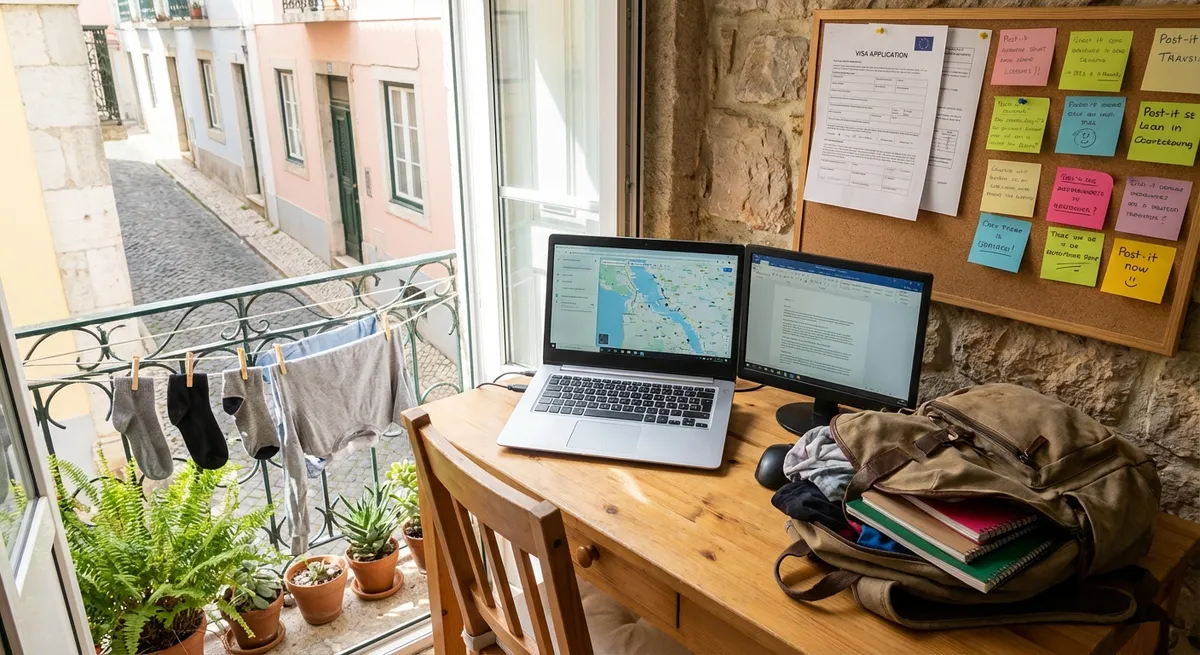
Most digital nomads don’t quit because of money or Wi‑Fi. They quit because the constant churn—new beds, new SIM cards, new logistics—eventually grinds them down. The trick isn’t to “optimize everything” like a productivity robot; it’s to strip away the repeat hassles so your energy goes into work and actually enjoying where you are.
These five field-tested tips aren’t sexy, but they’re the difference between looking like a nomad on Instagram and actually sustaining this lifestyle for years.
Build a “First 24 Hours” Routine for Every New City
Most people land, drop their bags, and improvise. That’s how you lose the first two days every single time you move. Instead, run the same playbook in every new place.
Within the first 24 hours, aim to always do the following:
- Lock in connectivity: Buy a local SIM or eSIM immediately, not “tomorrow.” Airport kiosks are pricier but often worth it if you’ve got calls or client messages waiting. If you use eSIMs, keep your top 2–3 providers bookmarked and installed ahead of time.
- Test your home base: Sit at the main work spot in your accommodation for 10–15 minutes and run a speed test during working hours, not at midnight when it’s quiet. If speeds are bad or the chair is killing your back already, fix it on day one—ask for another room, scout a coworking space, or find a café you can actually work in.
- Map your “minimum viable life”: On your first walk, locate a grocery store, a decent coffee spot, an ATM that doesn’t destroy you with fees, a pharmacy, and a quick food option that isn’t junk. You don’t need “the best place” yet—just reliable options so you’re not Hangry Nomad at 10 p.m.
- Anchor your schedule to local time: Decide immediately which hours you’ll be awake, working, and outside, especially if you’re crossing time zones. Don’t “see how it goes”; that’s how you end up jetlagged and answering Slack at 3 a.m. for a week.
Once you’ve run this “first 24 hours” routine in 4–5 cities, it turns into muscle memory. You’ll spend less time researching and more time just living.
Standardize Your Gear, Don’t “Optimize” It Forever
Endless gear tweaking is a nomad hobby, but it eats time, money, and mental bandwidth. The goal isn’t the perfect setup; it’s a boring, dependable setup that you never have to think about.
Dial in a simple, standardized kit:
- One work bag layout, everywhere: Same pockets, same locations for laptop, chargers, passport, and headphones. When everything lives in the same place trip after trip, you stop losing things in Ubers, cafés, and security lines.
- Backup for your non-negotiables: If something is mission-critical (laptop charger, mouse, adapter, glasses), you don’t own one—you own two. One stays in your work bag; the other lives in your accommodation. Redundancy is cheaper than a day of lost work.
- Universal power strategy: Carry one robust travel adapter plus a tiny power strip or multi-port USB charger. That combo turns a single sketchy wall outlet into a workable command center in old guesthouses or train stations.
- Kill the “just in case” items: If you haven’t used it in three consecutive stops, it’s a candidate to be mailed home, donated, or dropped. More stuff means more decisions, more weight, more friction.
Lock your setup and then stop tinkering. Revisit it maybe once or twice a year, not every new city. The time you save not watching “best travel gadget” videos is better spent finding a neighborhood you actually like.
Treat Your Sleep Setup as Seriously as Your Wi‑Fi
Most digital nomads obsess over Wi‑Fi speed and ignore the thing that quietly wrecks their productivity: lousy sleep. New rooms, street noise, weird pillows, 4 a.m. scooters—these add up. You don’t need control over the whole room; you need control over a few key variables.
Turn sleep into a portable system:
- Control light and sound first: A good eye mask and comfortable earplugs (or noise-canceling headphones with a sleep playlist) will do more for your performance than another laptop upgrade. Light and noise are the two things you can almost always override, no matter how bad the room is.
- Create a 10–15 minute pre-sleep ritual: Same actions, different cities. For example: quick stretch, no screens, dim lights, read for 10 minutes, then sleep. Your brain will start recognizing the cues even when the bed, climate, and time zone change.
- Temperature hacks: Many places either freeze you with AC or bake you with no AC. Lightweight layers, a breathable sleep shirt, and a small portable fan (or at least a fan app + white noise) can bridge a lot of bad setups.
- Be picky with booking: When you can, read reviews for noise keywords: “club next door,” “construction,” “thin walls,” “street noise.” Even if you love nightlife, you don’t want to sleep above it nightly while trying to keep client hours.
Good sleep gives you margin. Margin is what keeps delayed flights, loud neighbors, or surprise deadlines from pushing you over the edge.
Make Finances Boring: Automate and Cushion Everything
Cash flow chaos is one of the fastest ways to burn out. Exchange fees, surprise holds, foreign transaction costs, and random “card declined” moments can turn simple errands into multi-hour headaches.
Design your money setup so it mostly runs itself:
- Separate “life” and “business” accounts: Even if you’re solo, keep your personal living expenses and business income separate. It simplifies taxes, budgeting, and stress. When a client is late paying, you don’t want to guess whether rent is covered.
- Automate the essentials: Anything that can be on autopay, put on autopay—storage unit, cloud services, health insurance, subscriptions. You want as few “oops, I forgot” moments as possible when you’re in a different time zone.
- Plan for card failures, not card theft: Have at least two cards from different banks (Visa + Mastercard, ideally). Keep one in your day bag and one hidden in your luggage or locked away. Sometimes banks just don’t play nicely with certain ATMs or countries.
- Buffer your cash, not just your time: Try to keep an emergency fund that covers at least 1–2 flights back to a safe “home base” plus 1–2 months of living costs. When something goes sideways—family emergency, visa issue, medical problem—you don’t want the deciding factor to be your bank balance.
When money logistics are stable and predictable, you have more mental bandwidth to handle the unexpected things that actually matter.
Build a Local “Micro-Routine” Instead of Trying to Do Everything
The fastest way to hate a city is to treat it like a checklist you have to complete in 14 days while still working full-time. You’re not on vacation; you’re living—just somewhere else.
Instead of trying to see it all, build a small, repeatable life:
- Pick one “third place”: A café, coworking space, or quiet bar where the staff start recognizing you after a few days. Familiar faces reduce the “outsider” feeling and give your brain a sense of stability.
- Have a default day: Know what a normal, not-special weekday looks like: when you wake up, where you get coffee, where you work, when you walk, where you grab dinner. You can always deviate—but having a default prevents decision fatigue.
- Go deep on fewer things: Instead of hitting 10 tourist sites, pick one part of town and get to know it. Talk to one barista, one street vendor, one neighbor. Depth beats volume for feeling like you actually lived somewhere.
- Use constraints on purpose: For example, only explore within walking distance on weekdays; save the farther trips for weekends. Or no more than one “big outing” on workdays. Constraints prevent your days from turning into a frantic mashup of work + sightseeing + guilt.
Micro-routines make each city feel like a chapter in your life, not just another stamp in your passport.
Conclusion
Sustainable nomad life isn’t about constant motion or constant optimization—it’s about stripping out repeat friction so you can move without falling apart. A reliable first-24-hours routine, standardized gear, a portable sleep system, boring-but-solid finances, and simple local micro-routines will quietly remove most of the pain points that drive people back to a fixed address.
The more you can make the logistics invisible, the more room you have for the reasons you left home in the first place: better work, better places, and a life that actually feels like yours.
Sources
- U.S. Federal Trade Commission – Online and Mobile Banking Tips - Practical advice on keeping your financial setup secure while accessing accounts from different countries
- U.S. Department of State – Country Information - Official country pages with safety, entry, and local conditions that affect where and how you set up as a nomad
- Centers for Disease Control and Prevention – Traveler’s Health - Guidance on staying healthy on the road, vaccinations, and location-specific health risks
- Harvard Medical School – Why Sleep Matters - Explains how sleep quality affects performance, mood, and long-term health—critical for sustainable remote work
- World Bank – Remittance Prices Worldwide - Useful reference for understanding and minimizing transfer and remittance costs when moving money across borders
Key Takeaway
The most important thing to remember from this article is that this information can change how you think about Travel Tips.