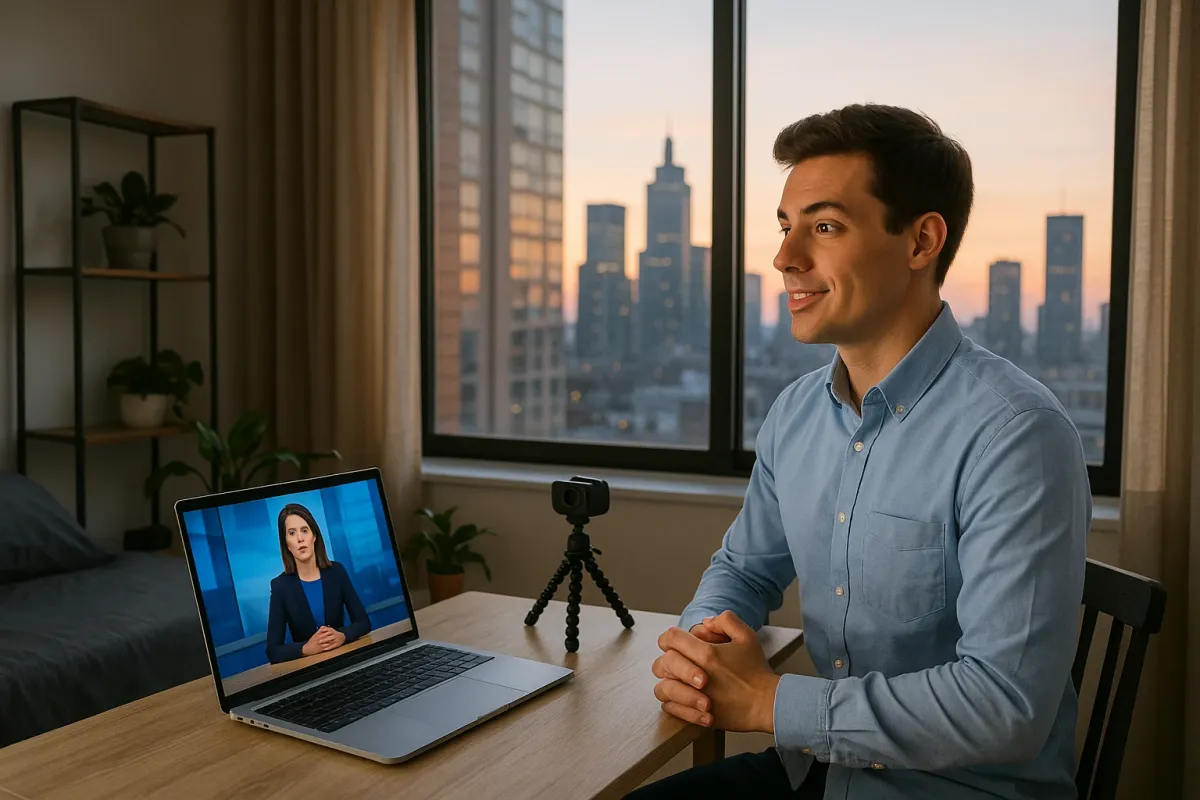
If you’ve been anywhere near social media this week, you’ve probably seen clips of the curvy news anchor who went viral after reading “mean” viewer comments live on air—using her professional broadcast voice. Instead of hiding, she turned trolls into content, leaned into her personality, and came out more visible and respected than before.
You might think that has nothing to do with remote work or digital nomad life. It absolutely does.
Digital nomads don’t just work online—we live online. Clients, employers, and collaborators rarely see us in person. How we show up on camera, in emails, and on socials is our equivalent of the anchor’s nightly broadcast. Her viral moment is a reminder: consistency, presence, and resilience are now core career skills.
Here’s how to translate that on-air toughness into a sustainable remote work routine, wherever you are in the world.
Treat Your Online Presence Like Your “Daily Broadcast”
That anchor didn’t go viral because she posted once and disappeared. She already had a routine, a tone, and a recognizable presence. The viral clip just amplified what she was already doing every day: showing up.
As a digital nomad, your “broadcast” might be a weekly LinkedIn update, a monthly newsletter, a consistent portfolio, or a reliable response time for clients. The key is that it feels steady and professional, even while your location changes. Create a simple presence stack: one platform to network (LinkedIn), one to showcase (personal website or portfolio), and one to be human (Instagram, X, or TikTok). Update them on a realistic schedule you can maintain from a café in Lisbon or a hostel in Chiang Mai. Don’t overcomplicate it—think “simple, consistent, findable.” People will trust you far more if your online footprint looks like you actually exist and actually work.
Build a “Camera-Ready” Work Routine Anywhere
The viral anchor looked composed because she follows the same on-air prep every day, regardless of what’s happening behind the scenes. Nomads need that same switch you can flip no matter which Airbnb or hostel bunk you wake up in.
Create a short, repeatable pre-work routine that you can run in 10–15 minutes anywhere on earth. For example: make coffee or tea, clear a tiny workspace (even if it’s half a table), noise-cancel (headphones or earplugs), open your task list, then start with one “warm-up” task like inbox triage or quick admin. Anchors can’t say, “I’m not feeling it, I’ll go live tomorrow.” Your routine is what gets you into work mode when the Wi‑Fi is flaky, the bed is uncomfortable, or the beach is 50 meters away. The more boring and repeatable this routine feels, the more powerful it becomes.
Learn to Take Criticism Without Letting It Hijack Your Day
That news anchor took some nasty comments—about her body, her appearance, her job—and didn’t crumble. She reframed them, used her skills (her voice, delivery, timing), and turned it into content that worked for her. Nomads need the same emotional muscle, just applied to clients, managers, and sometimes internet strangers.
Remote work strips away a lot of nuance. A Slack message can feel harsh. A client’s 2 a.m. Loom video full of “small tweaks” can feel like an attack. Build a simple filter before you emotionally react: (1) Is this about the work, or about me? (2) Is there one useful thing I can extract from this? (3) Does this require a reply right now, or after a walk? Then respond professionally, not defensively. “Thanks for the feedback, here’s what I’ll adjust…” is your equivalent of reading the comment in your broadcast voice—acknowledging it, but staying firmly in control. Treat your self‑esteem like a vital piece of equipment you pack with you; don’t hand it over to every impatient client or commenter.
Protect Your Reputation Like It’s Your Only Passport
For the anchor, trust is everything. If viewers don’t believe her, the whole job falls apart. For nomads, your online reputation is your job security. In a remote‑first world, a solid track record is worth more than a fancy coworking space or latest MacBook.
This means: never ghost a client, even if a project goes sideways. Close projects cleanly with a final summary and next steps. If you miss a deadline, communicate early, own it, and suggest a realistic plan to recover. Keep your promises small and your delivery consistent. Ask long‑term clients for short testimonials and put them somewhere visible. When you change countries or time zones, update your availability in your email signature and autoresponder. Five minutes of proactive communication can save five years of reputation damage. People will forgive Wi‑Fi outages, time‑zone mishaps, or noisy backgrounds. They won’t forgive disappearing without a word.
Design a Work Life You’d Be Proud to Put On Air
The news anchor’s clip went viral because she was clearly good at her job and unapologetically herself. That combination is exactly where digital nomads get stuck. Many either burn themselves out to “prove” they’re working or swing too far into “I’m always traveling” and slowly lose credibility.
Quietly ask yourself: if someone filmed a normal Tuesday of your remote work life, would you be proud of how you spent your time? Not performatively productive, just honest-proud. Are you giving clients focused blocks of deep work, or half-working all day? Are you choosing destinations you can actually work from, or just pretty places with terrible internet? Are you investing in your skills the way that anchor invested in her voice and delivery, or coasting on what you learned three years ago? You don’t need to live like you’re “on camera,” but you should be building a career that wouldn’t fall apart if someone suddenly paid attention.
Conclusion
That viral anchor didn’t become professional, resilient, and camera-ready overnight. Those skills were built long before the mean comments rolled in—and that’s the real lesson for digital nomads. The time to build your routines, your reputation, and your emotional backbone is before a crisis, a bad client, or a public mistake.
Show up consistently, wherever you are. Treat your presence like a broadcast, your routine like a pre-show checklist, and your reputation like the only passport that really matters. The world is already watching remote work and nomad life more closely than ever. Make sure that when they look your way, what they see is someone who knows how to work from anywhere—and look like they belong there.
Key Takeaway
The most important thing to remember from this article is that this information can change how you think about Remote Work.